
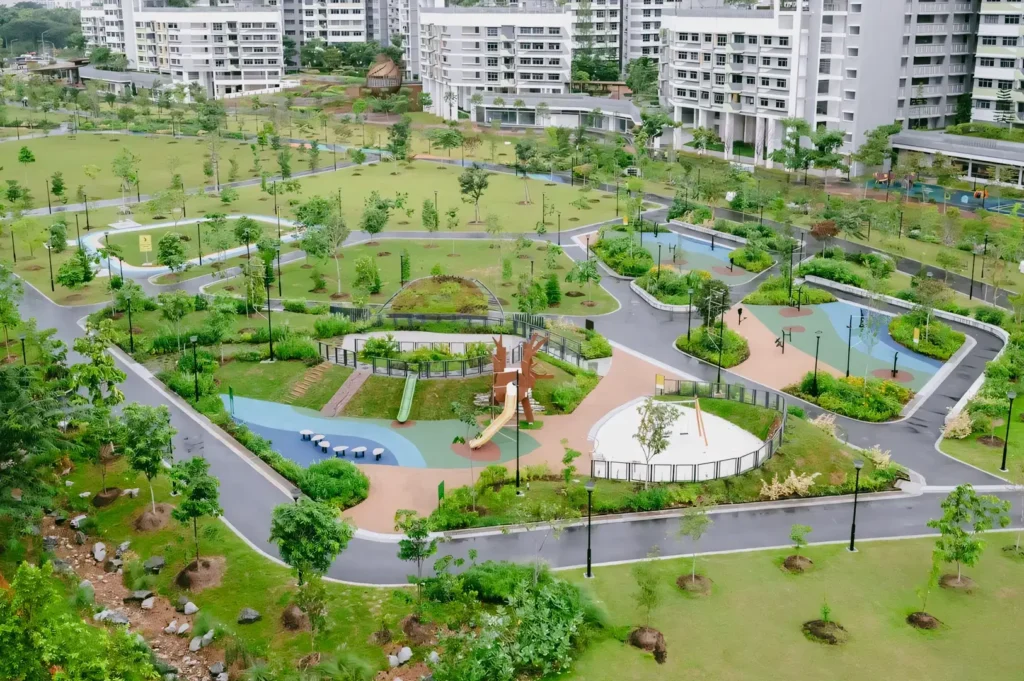
While urban convenience and transit connectivity often dominate property discussions, the availability of green spaces and outdoor recreational facilities plays an equally vital role in determining long-term residential well-being. Access to nature parks, park connectors, and community gardens offers residents a much-needed mental respite from the high-pressure demands of modern working life. When comparing centrally located enclaves with master-planned northern communities, buyers find two distinct approaches to integrating the natural environment into daily residential living.
Urban Greenery and Central-Fringe Recreation
Living in the central and rest of central regions presents a fascinating juxtaposition of dense urban architecture and carefully curated pocket parks. Space constraints in the city center mean that traditional sprawling forests are replaced by innovative linear parks, vertical gardens, and historic green sanctuaries. For example, residential enclaves positioned within the Farrer Park district, such as Dorset Gardens, place residents within close proximity to mature urban parks and landscaped recreational spaces.
These central green spots serve as peaceful morning jogging tracks and evening walking paths for professionals looking to decompress after a busy workday. Furthermore, the extensive park connector network links central neighborhoods directly to major waterfront promenades and national gardens, allowing cyclists and pedestrians to traverse the island through continuous green corridors. This seamless blend of urban dynamism and accessible pocket greenery ensures that city-fringe residents never feel entirely detached from nature despite their central address.
Northern Nature Reserves and Master-Planned Park Networks
In contrast, venturing toward northern residential sectors reveals an expansive approach to ecological planning, where housing developments are frequently framed by massive nature reserves, park networks, and water bodies. Northern Singapore is renowned for its rich biodiversity, connecting residents to iconic green spaces like the Central Catchment Nature Reserve, Sungei Buloh Wetland Reserve, and extensive neighborhood park connectors that weave through residential heartlands.
Developments emerging in these northern corridors, such as Clovelle of Woodlands, benefit directly from this proximity to vast natural landscapes. The abundance of open land allows for sprawling neighborhood parks equipped with modern sporting facilities, cycling tracks, and water play areas. For families with children or active individuals who enjoy weekend cycling expeditions and long nature walks, this northern environment provides an unmatched playground that encourages an outdoor-centric lifestyle.
Mental Well-Being and the Active Lifestyle
The physical presence of nature significantly influences daily mental well-being and stress mitigation. Studies consistently show that routine exposure to greenery and open water bodies reduces cortisol levels, improves cognitive focus, and encourages physical activity. Whether a resident prefers a quiet evening stroll through a neighborhood heritage park or an intensive weekend cycling workout along a coastal connector, having immediate access to well-maintained outdoor amenities supports a balanced lifestyle.
When evaluating properties, buyers should look beyond the immediate boundaries of the development to inspect nearby parks, fitness corners, and recreational connectors. A short walk to a serene green space can completely transform a homeowner’s daily routine, providing a dedicated sanctuary for exercise, meditation, and family bonding.
Selecting a Residential Setting for Nature Lovers
Ultimately, choosing between a central-fringe address with integrated pocket parks and a northern precinct framed by massive nature reserves depends on personal outdoor preferences. Buyers who value historic urban greenery, linear park connectors, and immediate proximity to cultural parks will find central-adjacent locations deeply satisfying. Conversely, those who prioritize expansive nature reserves, waterfront parklands, and a sprawling suburban green landscape will discover exceptional alignment in northern master-planned developments. By carefully assessing how outdoor spaces fit into their weekly routines, homeowners can secure a property that nurtures both body and mind.
About the Author